

Can I Install My Own Septic System in Ontario?

Ontario Building Code · Confirmed
Yes — you can install your own septic system in Ontario.
Your own system, on your own property — no installer licence required. What you still need: a permit, a compliant Part 8 design, and open trenches at inspection.
Reality check: a septic designer charges $800–$2,000 just for the paperwork. The information in it — your bedrooms, your soil, your lot measurements — is information you already have or can measure in an afternoon.
FREE 2026 PDF
Homeowner’s Guide28 pp.
Costs, permits, contractor vetting, and the owner-builder path — updated for the 2026 Building Code.
No spam. Straight talk from a builder.
Quick answer
Yes. Ontario homeowners can install their own septic system, with two conditions: it must be your own system, on your own property. You still need a permit before you dig, and the system still gets inspected. What you do not need is a licence – the licensing rules apply to people who install septic systems for others, not to an owner working on their own land.
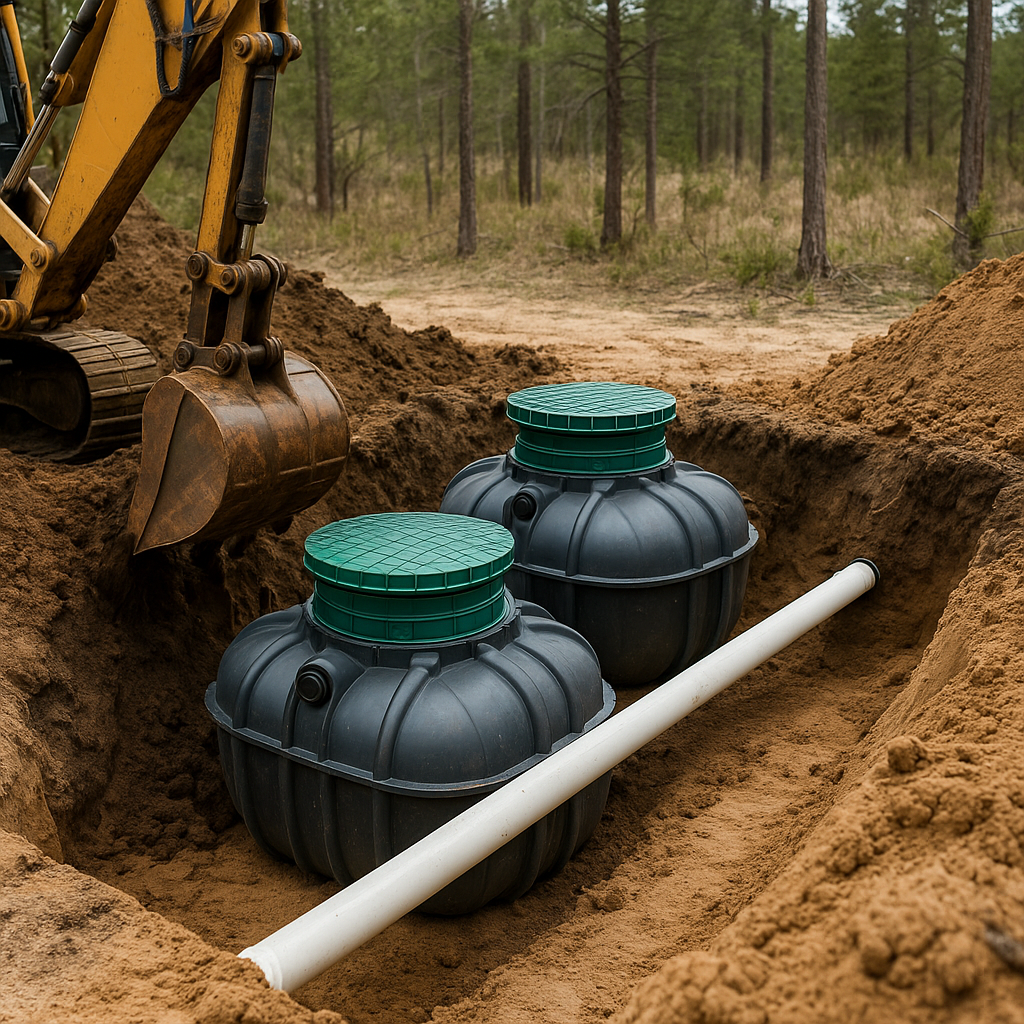
Did you know you can design your own septic system?
Legally – as the owner, for your own property. Our software does the Part 8 math, draws your site plan and cross-section, and fills in the township forms. You check it and sign it as the owner.
Start here – free
2-minute Septic Check. Your flow, tank size, and risk level – plus what your lot is missing.
Homeowners – one project
Permit Package Builder – $99.99 + HST. Part 8 math, site plan, cross-section, filled township forms. Print and submit.
The Short Answer and Where It Comes From
Ontario septic systems fall under Part 8 of the Building Code, and installation work is normally restricted to licensed sewage system installers. The owner exemption is built into the Building Code Act: a homeowner may construct their own sewage system on their own residential property without holding an installer licence. It is the same principle that lets you wire your own house or frame your own garage – the province regulates people who do this work for compensation, not owners doing it for themselves.
That exemption is a right, not a loophole. Townships and health units process owner-built septic applications every season. What they expect in return is simple: a complete application, a system that matches the approved design, and open trenches at inspection time.
What “Owner-Built” Legally Means
Three tests, all of them plain:
- Your property. The lot has to be yours. You cannot owner-build on your cousin’s land or on a property you are about to buy.
- Your system. It serves your own residence – not a rental project you plan to flip the week after the final inspection.
- Your responsibility. You are the constructor in the township’s eyes. The permit is in your name, the inspections are your appointments, and a mistake is yours to fix.
Can I Hire an Excavator Operator and Still Call It Owner-Built?
Yes. Hiring a machine and an operator for the digging does not make the operator the installer. You remain the person constructing the system: you hold the permit, you order the materials, you set the design, you call the inspections. The operator moves dirt under your direction.
Where the line sits
If one contractor takes over the job – design, materials, install, the whole package – that contractor is installing a sewage system for compensation and needs to be licensed for it. The practical line most owner-builders draw is machine time by the hour, everything else by the owner.
The Permit Still Comes First
Owner-built does not mean permit-free. Before anything is dug you need a sewage system permit from your local approval authority – the township building department, the health unit, or in some areas a conservation authority. The application is judged on paper: daily design flow, tank sizing, bed sizing from your T-time, a scaled site plan with setbacks, soil evidence from test holes, and a cross-section of the proposed bed.
This paperwork is where owner-builders either save money or lose it. A septic designer charges $800 to $2,000 to assemble it. The information in it – your bedrooms, your soil, your lot measurements – is information you already have or can measure in an afternoon.
What Inspections Are Required and When
- Substantial completion / pre-backfill. The inspector sees the whole system open: tank set and level, bed built to the approved dimensions, pipe laid at grade, stone in place. This is the inspection that matters.
- Final / use authorization. Some authorities return after grading to authorize use of the system.
Builder’s tip
Book the pre-backfill inspection before you need it. Inspectors in cottage country run one to two weeks out in summer, and an open excavation in a July thunderstorm is not where you want to be waiting.
Can I Backfill Before Inspection?
No. Backfilling before the inspector sees the open system is the single fastest way to turn a good owner-build into an expensive one. The inspector cannot approve what they cannot see, and the standard remedy is to uncover the work – digging up a finished bed by hand around live pipe. Some authorities can also require the system be rebuilt. Leave it open, cover the stone with fabric if weather threatens, and wait for the green light.
The Five Most Expensive Owner-Builder Mistakes
- 1. Backfilling early. Covered above. Re-excavation costs more than the machine time you saved.
- 2. Guessing the T-time. The bed is sized from your percolation time. Guess it optimistic and the inspector rejects the design; guess it pessimistic and you buy a bigger bed than the lot needed.
- 3. Missing a setback by a metre. A bed 29 m from a dug well fails a 30 m requirement. Measure to the well, the property lines, the water, and the house before you finalize the layout – and leave room for the reserve area.
- 4. Ordering materials off the design dimensions. The hole is bigger than the bed – about a foot over on every side – and pipe is ordered with 20 percent waste. Supplier lists that ignore this come up short on delivery day.
- 5. Submitting a thin application. Applications bounce for missing paper far more often than for bad systems. A bounced application in June can push your project to September.
What the Paperwork Looks Like
A complete owner-builder application contains
- The application form
- A daily design flow worksheet
- A septic tank sizing worksheet
- T-time results with test hole logs
- A scaled site plan showing every setback plus the reserve bed area
- A cross-section drawing of the bed, and the fees
Your township may add its own checklist on top. Before you sketch a layout, check the distances against the Ontario setback tables – setbacks kill more owner-build layouts than soil does.
Frequently Asked Questions
Do I need a licensed installer if I do the work myself?
No. The installer licence applies to people installing sewage systems for others. An owner constructing their own system on their own residential property is exempt – but the permit and inspections still apply.
Can I install a septic tank without a permit in Ontario?
No. Any new or replacement sewage system needs a permit from the local approval authority before construction starts. Installing without one risks orders, removal, and problems when you sell.
Who inspects an owner-built septic system?
The same inspector who checks contractor installs: your township building department, health unit, or conservation authority, depending on who administers Part 8 in your area. The system is inspected open, before backfill.
How much can I save building my own septic?
Contractor quotes for conventional beds run $25,000 to $40,000 in Ontario, and raised or filter beds $30,000 to $50,000. Owner-builders supplying their own materials and hiring machine time by the hour commonly land under $20,000 all-in – the savings on a typical bed can reach $15,000 or more.
Know your numbers before anyone quotes you
Two minutes gets you your estimated daily design flow, minimum tank size, and lot risk level – the three numbers every septic decision starts with.
Keep reading
Owner-Builder
Owner-Builder Septic in Ontario: The Complete Guide
The whole route from first test hole to final inspection.
Setbacks
Ontario Septic Setbacks: Every Distance in One Place
Tank and bed clearances, and the raised-system multiplier.
System Types
Raised Bed vs Conventional: Which Does Your Lot Need?
Your soil decides – and the price difference is countable.
Soil
How to Read Perc Test Results in Ontario
What T-time means and what happens when the number is bad.